

The projected winner is clear to one major network, but certification and the final margin still matter in one of 2026’s closest primaries.
Michigan’s Democratic U.S. Senate primary was far tighter than late polling suggested. Abdul El-Sayed held a narrow statewide advantage over Representative Haley Stevens after most ballots were counted, with late Wayne County returns shaping the final margin.
NBC News projected El-Sayed as the winner early Wednesday, while the Associated Press had not yet called the contest at publication. A media projection is not an official certified result.
Abdul El-Sayed is the projected Democratic nominee in the Michigan Senate primary election results after narrowly leading Haley Stevens. He is positioned to face Republican Mike Rogers in November for the open seat being vacated by retiring Senator Gary Peters.
The Numbers Behind the Cliffhanger
Available counts placed El-Sayed at roughly 48.6% to 48.7%, with Stevens near 47.3% to 47.4% and about 95% of the vote reported. The figures remained subject to change as Detroit-area ballots were processed.
| Race snapshot | Latest reported position |
|---|---|
| Abdul El-Sayed | About 48.6%–48.7% |
| Haley Stevens | About 47.3%–47.4% |
| Estimated vote counted | About 95% |
| November opponent | Republican Mike Rogers |
The finish differed sharply from a final Emerson College poll showing El-Sayed ahead 54% to 39%. That gap between polling and returns helped turn election night into an extended count.
Why Wayne County Controlled the Suspense
El-Sayed showed strength in Kent County and heavily Democratic Washtenaw County. Stevens narrowed the gap as more ballots arrived from Wayne County, which includes Detroit and holds the state’s largest pool of Democratic voters.
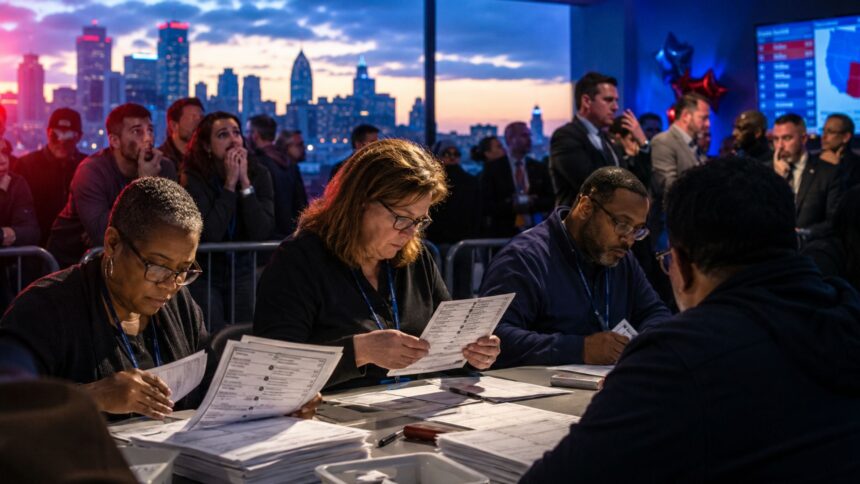
Bridge Michigan reported that about 5% of votes remained uncounted around 6 a.m., most of them in Detroit. Both candidates urged patience and avoided declaring victory during their election-night speeches.
Two Competing Democratic Strategies
El-Sayed, a former public-health official, campaigned as a progressive outsider focused on Medicare for All, economic populism and limiting large-donor influence.
Stevens, a four-term House member, emphasized legislative experience, major party endorsements and her history of winning competitive districts.
Money became a defining issue. AP reported that Stevens benefited from roughly $30 million in support linked to AIPAC, while broader estimates placed outside spending connected to the contest above $40 million.
The November Matchup Takes Shape
The Democratic nominee advances to face Republican Mike Rogers. Gary Peters’ retirement leaves the seat open, placing Michigan near the center of the national fight for Senate control in the 2026 midterms.
County canvassers must verify totals before the state certifies the result. The reported margin may move as outstanding ballots and routine corrections are incorporated.
Who won the Michigan Democratic Senate primary?
Abdul El-Sayed is the projected winner according to NBC News. The Associated Press had not called the race at publication, and Michigan’s official certification process remained pending.
What were the latest El-Sayed vs. Stevens results?
El-Sayed was reported near 48.6%–48.7%, while Stevens stood near 47.3%–47.4%, with approximately 95% counted. Remaining Wayne County ballots were crucial to the final margin.
Who will the nominee face in November?
The Democratic nominee will face Republican Mike Rogers for the seat being vacated by Gary Peters. The outcome could affect the wider struggle for control of the U.S. Senate.
A Narrow Result With a National Echo
Michigan delivered no landslide, but the primary exposed a major debate over ideology, campaign money and electability. The immediate challenge is whether the eventual nominee can unite Democratic voters before November.
Disclaimer: Election totals can change before certification. Projections, spending figures and estimates should be treated as provisional unless confirmed by election authorities.