

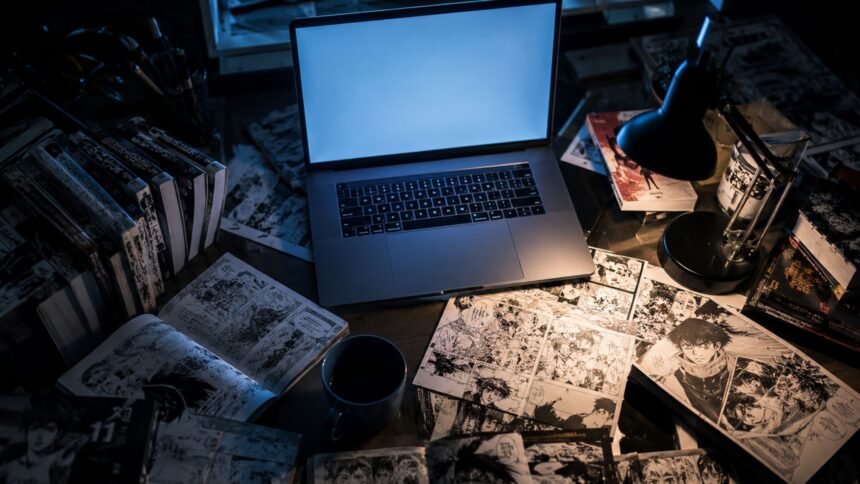
A look at the free scan site millions of readers use, the legal grey zone it operates in, and where to read the same stories without it.
If you’ve searched “read [any popular manga] free online” in the past year, you’ve probably landed on WeebCentral. It’s fast, it doesn’t ask for an account, and it has thousands of series available within hours of release. It’s also part of an industry that Japanese publishers say costs them tens of billions of dollars a year — and in early 2026, watched the world’s largest version of this kind of site get raided and shut down. Here’s what WeebCentral actually is, how sites like it work, and what the legal alternatives look like in 2026.
WeebCentral is a free, ad-supported manga aggregator that hosts scanlations — fan-scanned and fan-translated manga chapters — without licensing agreements from Japanese publishers or copyright holders. It grew rapidly after older aggregator sites like MangaSee and MangaLife shut down or redirected their traffic to it, and it now sits in the same legal grey zone that led to the shutdown of Bato.to, once the largest manga piracy site in the world, in January 2026.
How a Site Like This Actually Works
Scanlation didn’t start as a business. It started as an amateur, community-driven practice: a fan buys or scans a Japanese volume, another fan translates it, a third types and cleans up the art, and the finished chapter gets posted for free to a small fan site or forum, usually for a series with no official English release. That system is still how most raw scanlation happens today.
What changed the economics is aggregation. Once individual scanlator groups started producing steady output, sites emerged that didn’t scan or translate anything themselves — they simply collected finished scanlations from dozens of smaller groups, indexed them in one searchable library, and monetized the traffic with ads. This is functionally what WeebCentral does, and it’s the same model that built Bato.to into a site racking up billions of visits before it was taken down.
WeebCentral itself states that it prioritizes officially licensed translations over unofficial ones when both are available, which distinguishes it somewhat from pure piracy operations — but the bulk of its catalog is still unlicensed scanlated content redistributed without publisher consent, which is what keeps the site in a legal grey zone rather than a clean one.
The Numbers Behind the “Grey Zone”
Publishers don’t treat this as a minor nuisance. A few figures put the scale in perspective:
| Metric | Figure | Source period |
|---|---|---|
| Estimated annual global losses from manga piracy | ~¥8.5 trillion (~$55 billion) | 2025 (ABJ) |
| Manga’s share of all pirated published content globally | 70.15% of 66.4 billion visits | 2024 (Muso) |
| U.S. readers who admit using unauthorized manga sites | 30% | 2025 survey (ABJ) |
| Visits recorded across Bato.to and its 60 affiliated domains | 7.2 billion | Oct 2022 – late 2025 (CODA) |
| Japan’s total estimated piracy damage (anime, manga, games) | ¥5.7 trillion (~$38 billion) | 2025 (METI) |
The most consequential of these numbers, for site operators specifically, came from the Content Overseas Distribution Association (CODA), the industry group representing Japanese rights holders including Kodansha, Shueisha, Shogakukan, Square Enix, and KADOKAWA. CODA’s investigation found roughly 7.2 billion visits across Bato.to and 60 affiliated domains between October 2022 and late 2025. That investigation led to a raid by Chinese police, an arrest, and the complete shutdown of Bato.to and its affiliated network by January 19, 2026 — a clear signal that aggregator operators, not just individual scanlators, are now legal targets.
It’s worth noting these loss estimates are contested. They’re typically built on a “lost sale” assumption — that every pirated read equals a sale the publisher would otherwise have made — which researchers and even some industry commentators consider a rough, likely inflated methodology. What isn’t contested is the direction of the trend: piracy site visits, publisher lawsuits, and government intervention have all been rising, not falling.
Why Publishers Object — Beyond the Money
The financial argument is the headline, but publishers and the original scanlators raise a few other objections that get less attention:
- Original scanlators rarely see any revenue. The community member who spends hours cleaning and translating a chapter typically gets nothing when an aggregator republishes it with ads attached — the money goes to whoever runs the aggregation site, not the person who did the translation work.
- Licensing gets undermined. When a series already has thousands of readers via unofficial scans, publishers have a harder case for greenlighting an official English release, since the market appears “already served.”
- Quality and accuracy vary wildly, since fan translations aren’t reviewed by the original creator, editor, or licensed publisher — meaning readers are sometimes getting an inaccurate version of the story without knowing it.
- Malware and ad-network risk. Free aggregator sites are frequently monetized through aggressive, poorly vetted ad networks; security researchers have flagged manga piracy sites as a notable vector for malicious redirects and drive-by download attempts.
Where to Read the Same Manga Legally in 2026
The good news is that the official ecosystem has gotten dramatically better than it was five years ago, largely because publishers wanted a same-day alternative to piracy. Here’s what’s actually available right now:
- MANGA Plus — Shueisha’s own global platform. Simulpublishes the first and most recent chapters of major Weekly Shonen Jump titles (One Piece, Jujutsu Kaisen, Chainsaw Man, Spy x Family) for free, in multiple languages, the same day they release in Japan.
- Shonen Jump app (Viz Media) — Viz’s mobile-first app gives free access to first and latest chapters, with a paid tier unlocking the full back catalog of 15,000+ chapters for a low monthly price.
- VIZ Manga — Viz’s broader digital library outside the Shonen Jump brand, covering romance, horror, fantasy, and slice-of-life titles alongside the big shonen names, priced per volume or via a low-cost monthly plan.
- K MANGA (Kodansha) — Kodansha’s official English app, the primary legal home for Attack on Titan, Blue Lock, Fairy Tail, and other Kodansha-owned series, mixing free chapters with affordable purchases.
- Crunchyroll Manga — Crunchyroll’s standalone manga app shut down in 2023, but manga reading returned as an integrated feature inside the main Crunchyroll app in October 2025, available to Premium subscribers in the US and Canada, spanning titles from Viz, Square Enix, and Yen Press.
- BookWalker, Comikey, Azuki, Mangamo — Smaller but fully licensed storefronts and subscription apps that fill in titles the bigger four don’t carry, often with simulpub deals of their own.
- Libby and hoopla — Free with a participating public library card; a genuinely no-cost, fully legal way to read licensed digital manga and graphic novels.
Manga Plus and the Shonen Jump app are the closest things to a like-for-like replacement for aggregator sites: both are free, both update same-day, and neither requires you to hand your traffic to a site with no licensing relationship to the people who made the work.
The Part of This Story That Doesn’t Get Fixed by One Shutdown
Bato.to’s shutdown in January 2026 was framed by some outlets as a turning point. It probably isn’t one, on its own. Piracy researchers and even publisher-aligned trade groups tend to describe this as a “hydra” problem — take down one major aggregator and traffic redistributes to the next one within weeks, which is exactly the dynamic that helped WeebCentral absorb users from MangaSee and MangaLife when those sites redirected. CODA and Japan’s Ministry of Economy, Trade and Industry (METI) have both signaled they intend to keep pursuing aggregator operators rather than individual readers, including funding AI-based detection tools aimed at over a thousand pirate sites — but the underlying incentive (free, fast, no account required) isn’t something a single legal action removes.
FAQ
Is WeebCentral illegal to use?
Operating or hosting a scanlation aggregator like WeebCentral is a copyright infringement in most jurisdictions, since it redistributes translated work without publisher permission. In most countries, reading a pirated page as a visitor carries far less legal exposure than hosting or uploading it, but the site itself operates outside licensing law.
Is WeebCentral the same as Bato.to?
No. They’re separate platforms, but they follow the same aggregator model — collecting scanlations from multiple sources into one searchable library. Bato.to and its 60 affiliated domains were shut down in January 2026 following a CODA-backed investigation and a Chinese police raid.
Why did MangaSee and MangaLife point users to WeebCentral?
Community reports indicate MangaSee and MangaLife redirected their user bases toward WeebCentral as those older sites wound down operations, which is a large part of why WeebCentral’s traffic grew quickly through 2025 and into 2026.
What’s the fastest free, legal way to read new manga chapters?
MANGA Plus and the Viz Shonen Jump app both publish the first and most recent chapters of major Shueisha series for free on the same day they release in Japan, without requiring a subscription for that limited window.
Do scanlators get paid when a site like WeebCentral hosts their work?
Generally no. Original scanlation groups usually receive no share of the ad revenue an aggregator generates from republishing their translations, which is a recurring complaint from the scanlation community itself, not just from publishers.
The Bottom Line
WeebCentral isn’t an outlier — it’s the current iteration of a model that’s existed since the early internet: fan translation work gets aggregated, monetized by someone other than the fans who did it, and eventually targeted by rights holders once it gets big enough to show up in a damage estimate. The 2026 shutdown of Bato.to shows publishers are now willing to pursue aggregator operators directly rather than just issuing takedown notices. Whether WeebCentral is next isn’t something this piece can predict — but the legal alternatives available right now are close enough in speed and cost that “I couldn’t find it anywhere legal” is a much weaker argument than it was even two or three years ago.
Sources & Verification
- Content Overseas Distribution Association (CODA) investigation findings, via Kotaku and PRIMETIMER reporting, Jan–Feb 2026
- Anti-Piracy Bureau for Comics/ABJ industry survey data, via Japan Today, The Star, TorrentFreak, and Tokyoscope, Oct–Nov 2025
- Japan Ministry of Economy, Trade and Industry (METI) 2025 piracy damage survey, via AOL/Kyodo reporting
- Muso global piracy visit data (2024), via Databoks
- Official pricing and catalog details for MANGA Plus, Viz/Shonen Jump, K MANGA, and Crunchyroll Manga, verified via PublishDrive, The Droid Guy, WhistleOut, and MangaShed, current as of April–June 2026
Editorial note: Site names, domains, traffic figures, and financial-loss estimates in this piece are drawn from third-party reporting and industry trade-group surveys current as of mid-2026. Piracy-related damage estimates rely on assumption-based “lost sale” methodology and are cited as reported, not independently verified. Site status, pricing, and app availability can change quickly in this space — verify current details directly with each platform before subscribing.