

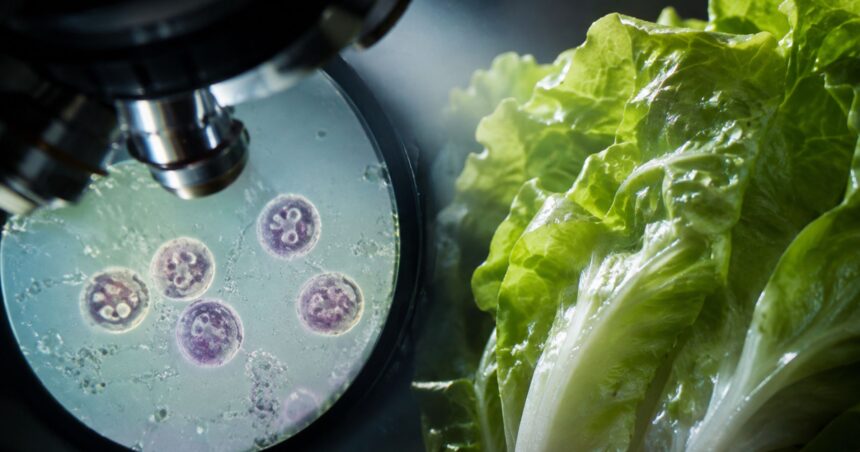
The parasite is rarely fatal, but the scale of the current U.S. outbreak has turned a summer food-safety warning into a national concern.
Michigan confirmed two outbreak-related deaths on August 3, 2026. Both people had significant underlying health conditions, and officials said cyclosporiasis and dehydration may have worsened them.
The outbreak is still evolving. A recalled iceberg-lettuce cluster explains only part of the national rise, so not every reported case is tied to one supplier or restaurant.
Cyclospora is a microscopic parasite that causes cyclosporiasis through contaminated food or water. Its main warning sign is prolonged watery diarrhea. Anyone with persistent symptoms—especially after eating recalled lettuce—should contact a healthcare professional and request specific Cyclospora testing.
Why the Numbers Look Confusing
| Measure | Figure |
|---|---|
| Confirmed U.S. domestic cases | 6,707 |
| Additional cases under review | More than 11,500 |
| Michigan cases | 11,234 |
| Michigan deaths | 2 |
| Nine-state lettuce cluster | 1,947 cases; 98 hospitalizations |
CDC’s confirmed count covered reports through July 27. State totals can be higher because they may include probable or unverified cases. The lettuce cluster is only one subset of the national outbreak.
What Cyclospora Does
Cyclospora infects the small intestine. Symptoms often begin about one week after exposure and may include watery diarrhea, cramps, bloating, nausea, fatigue, appetite loss and weight loss. Untreated illness can last weeks, disappear, then return.
Direct person-to-person spread is unlikely because the parasite generally needs one to two weeks outside the body to become infectious.
The Lettuce Recall
Taylor Farms recalled iceberg lettuce sourced from central Mexico. FDA says affected products included certain Marketside iceberg salad and shredded lettuce packages with dates through August 3, 2026. Consumers should discard recalled products, sanitize surfaces they touched and seek care if symptoms develop.
Cyclospora Questions People Are Asking
Is Cyclospora deadly?
Cyclospora is usually not life-threatening. Death is uncommon, but severe diarrhea and dehydration can be dangerous for people with underlying conditions or weakened immune systems.
How is cyclosporiasis diagnosed?
Cyclosporiasis is diagnosed through stool testing. Routine panels may not automatically include Cyclospora, so patients may need a specific test and sometimes samples collected on different days.
What is the treatment?
The standard treatment is trimethoprim-sulfamethoxazole. Fluids and rest are also important. People allergic to sulfa drugs should discuss alternatives with a clinician.
Can washing lettuce remove Cyclospora?
Washing produce is good practice, but recalled lettuce should not be eaten. FDA advises throwing it away or returning it.
What Matters Now
Case counts may keep rising because reporting can lag for weeks. Check recalled products, watch for persistent diarrhea and seek timely medical care.
Sources & Verification
- CDC outbreak advisory and surveillance.
- FDA outbreak investigation and recall guidance.
- Michigan Department of Health and Human Services updates.
Editorial Disclaimer: Information reflects official updates available through August 3, 2026. Figures may change. This article is not medical advice.